Institutional Capability Architecture
The systems through which AI capability is developed and deployed — engineering, research, infrastructure and governance. What must institutions build to turn AI access into sustained capability?
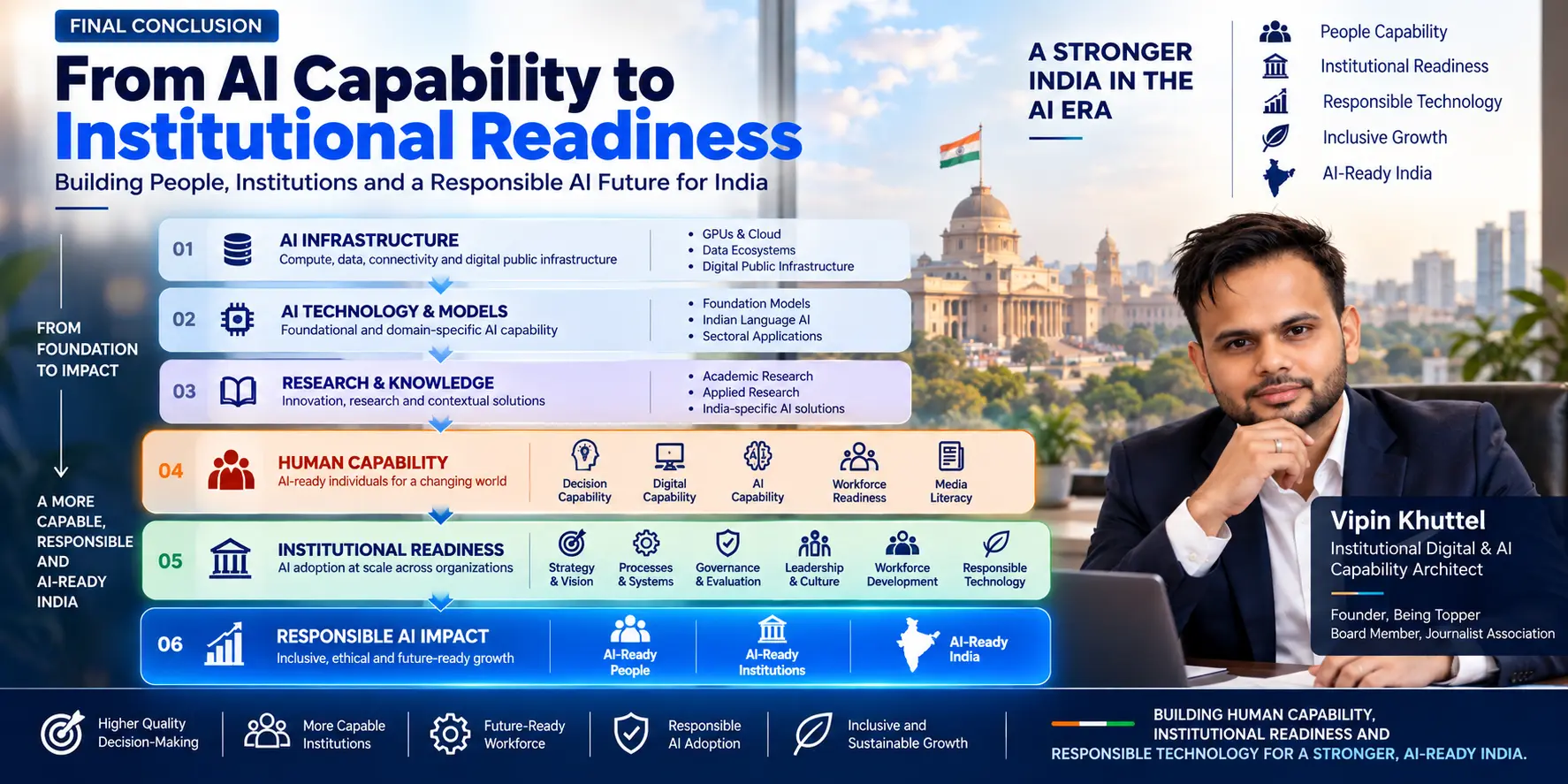
A structured approach to building human capability, digital capability, AI capability, workforce readiness, institutional readiness and responsible technology for the AI era.
Access to AI is not the same as the capability to use it well. This architecture is what connects the two — deliberately, not by accident.
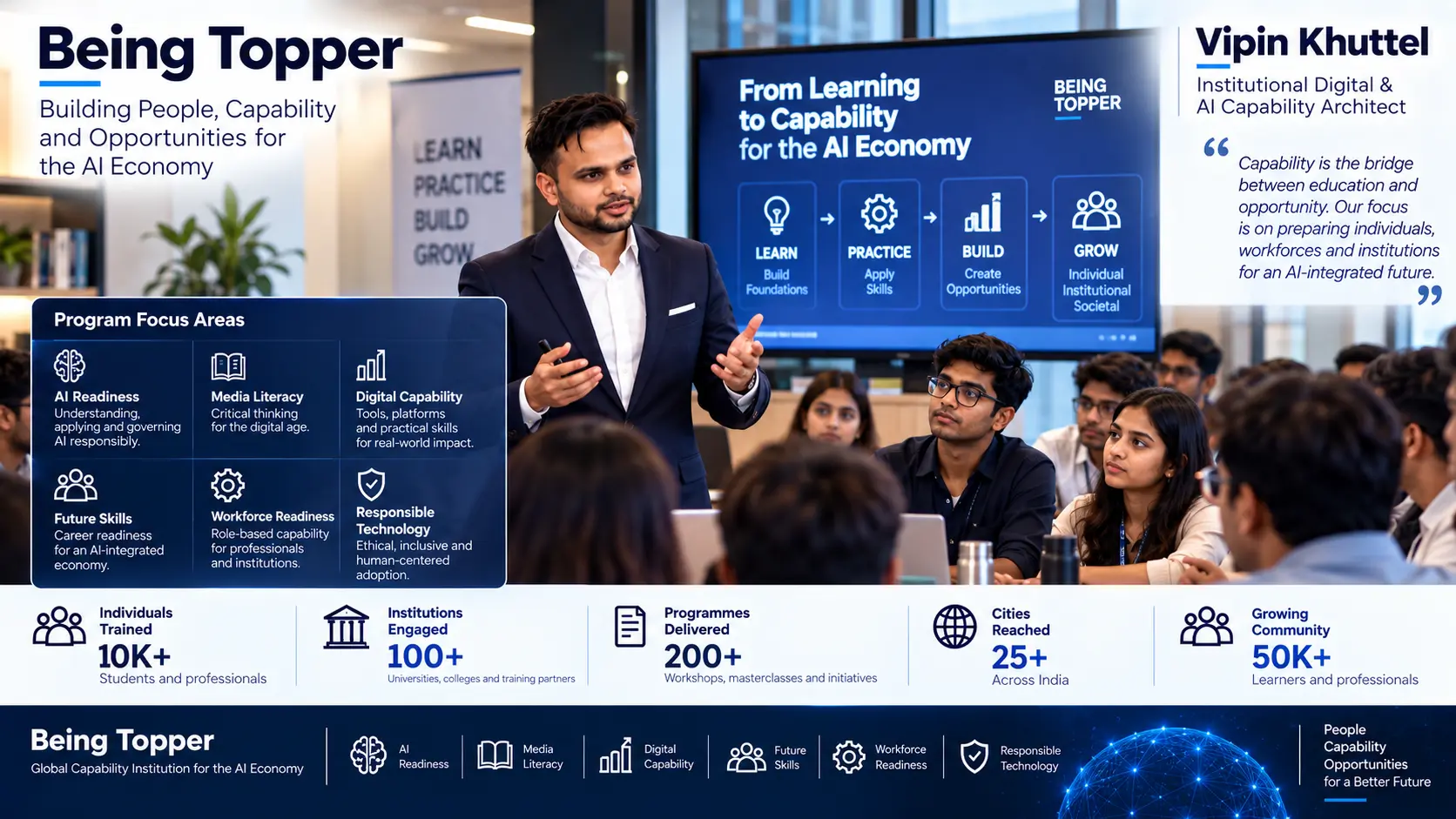
Developed and articulated through the work of Vipin Khuttel, and published through Being Topper.
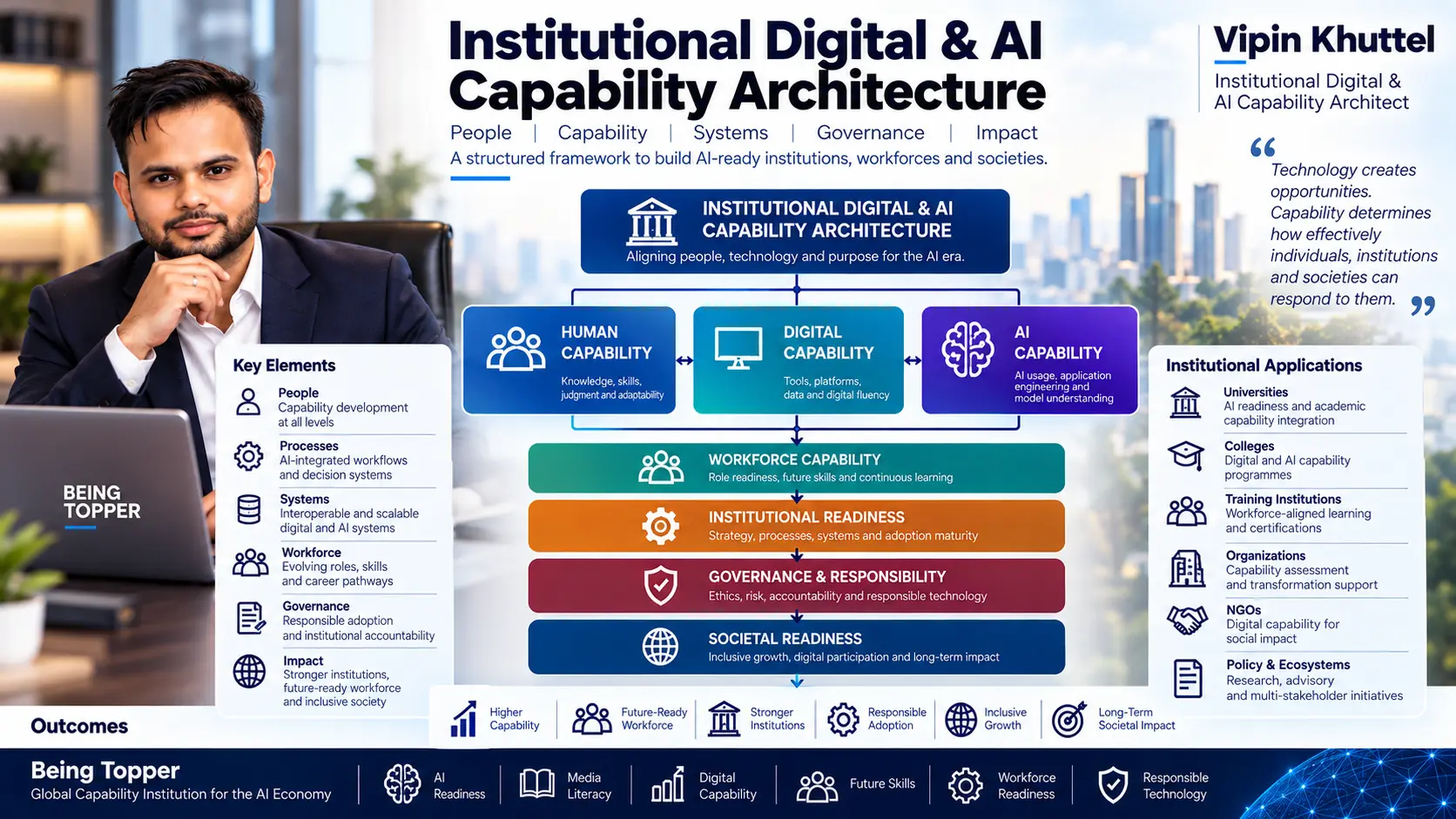
Institutional Digital & AI Capability Architecture is a structured approach to aligning people, digital systems, AI capability, workforce development, institutional readiness and responsible technology adoption.
It moves the conversation beyond technology acquisition toward the capability required to use technology effectively, responsibly and sustainably.
The objective is not simply to make an institution "AI-enabled," but to develop the human, digital, organisational and governance capabilities required to operate effectively in an AI-integrated environment.
Technology creates opportunities. Capability determines how effectively individuals, institutions and societies can respond to them — and that capability does not arrive automatically alongside the technology.
AI, automation, digital platforms and data systems are changing how institutions operate, often faster than institutions can structurally adapt. Access to technology does not automatically create the skills, judgment or organisational capability required to use it well — two institutions with identical tools can produce very different outcomes.
Institutions need structured capability development across people, systems, workflows, workforce and governance. Readiness is built deliberately, not assumed.
AI adoption is a technology decision. AI capability is an institutional decision.
The architecture moves from individual capability to institutional capability to societal capability. Each layer depends on the one before it.
The foundation of responsible technology adoption — knowledge, skills, judgment, adaptability and continuous learning. The question isn't whether people have access to technology, but whether they can work effectively with it.
The environment in which modern technology operates — digital fluency, platforms, data, systems and technology-enabled workflows. The foundation on which deeper AI capability can develop.
The ability to understand and work with AI across different levels. The appropriate level depends on role, purpose and institutional requirements — not every person or institution needs the same depth.
Attention to evolving roles, future skills, career pathways and continuous learning. The objective isn't to replace roles with technology, but to understand how work itself changes.
Whether an organisation is structurally prepared to use digital and AI capabilities — strategy, processes, systems, culture and adoption maturity.
Ethics, risk, accountability and institutional responsibility. As AI becomes embedded in decision-making, governance becomes part of capability itself, not an external add-on.
The architecture extends beyond organisations to inclusion, digital participation, AI literacy, media literacy and long-term societal impact — connecting institutional capability with the wider purpose of a more capable, informed and responsible society.
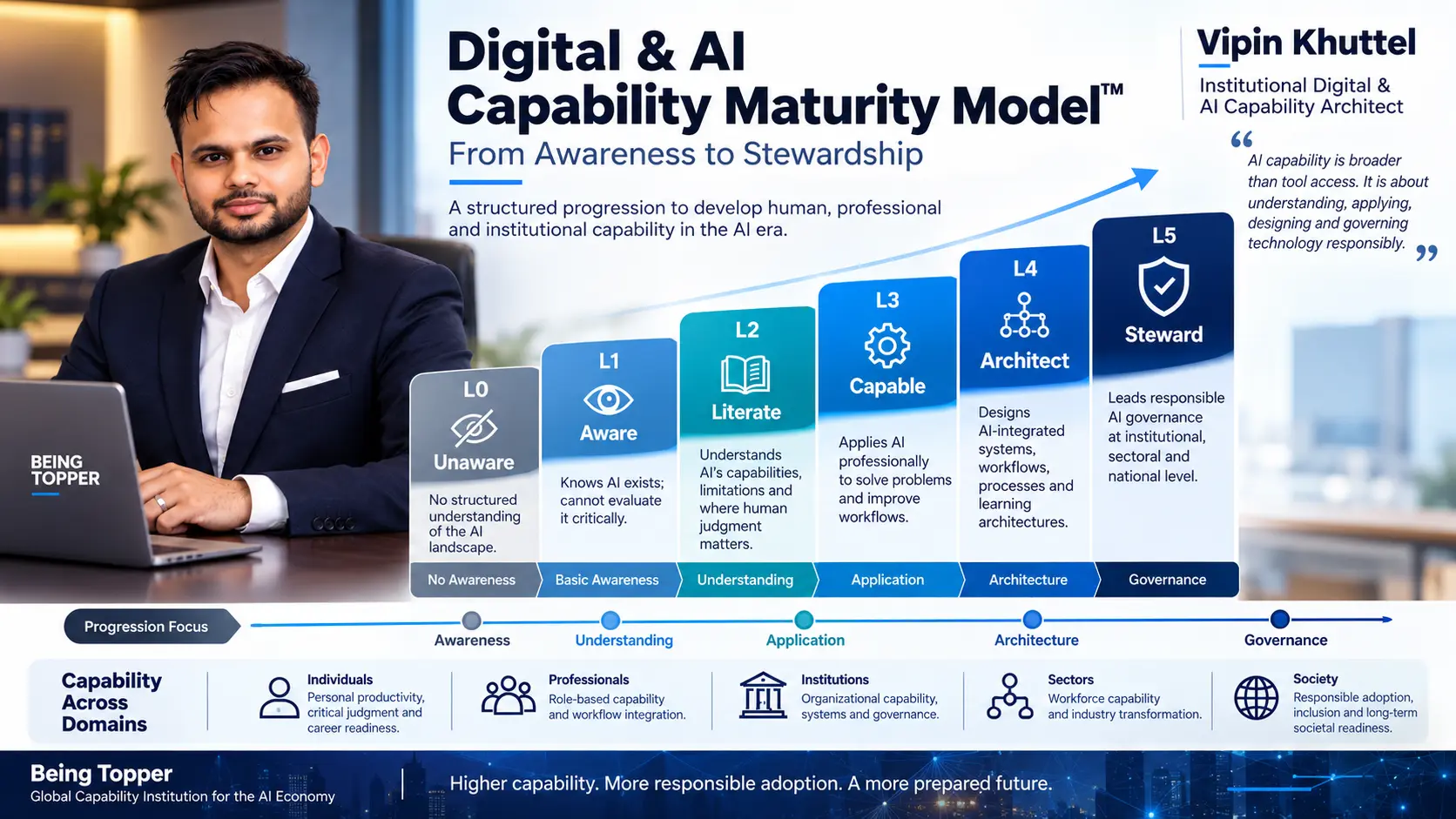
Capability develops progressively. Awareness alone does not constitute capability. The Digital & AI Capability Maturity Model describes six stages.
The most common bottleneck is the move from L2 to L3 — not a skills gap but a mindset shift, in how a person frames the question of what AI is for.
"How can AI help me do what I already do, just faster?" The workflow stays the same — AI is used as a quicker typewriter, not a reason to rethink the work.
"Now that AI exists, how should this workflow be redesigned from scratch?" Effort shifts toward framing precise, complex problems that were previously unresolvable, rather than requesting basic answers.
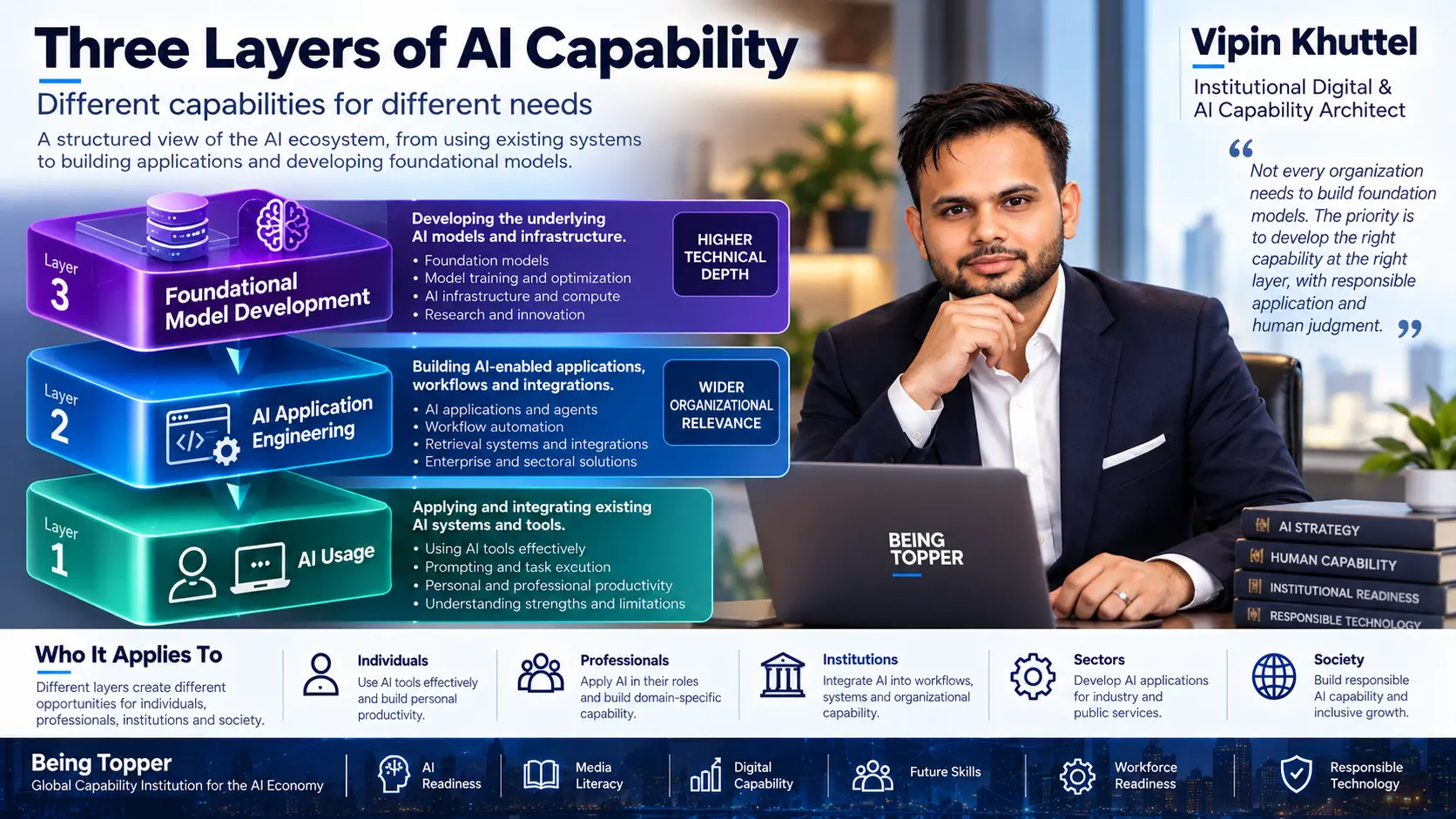
Layer 1
Using existing AI systems and platforms for research, analysis, writing, decision support and everyday professional work. This layer can create substantial value without requiring anyone to build the underlying technology — the key capability is using AI meaningfully and responsibly, not just having access to it.
Layer 2
Engineering AI-enabled applications — integrating AI into workflows, connecting models with organisational processes and building specialised solutions. This requires deeper technical and systems capability than simply using an existing AI tool.
Layer 3
Developing the underlying models, architectures, infrastructure and research that the other layers depend on. This is a specialised technical and research domain — most institutions will never need to operate here, and that's by design, not a gap.
The AI Impact Architecture, presented at AI Impact 2026, Bharat Mandapam, New Delhi, extends capability into three dimensions. This is where the societal layer becomes visible.
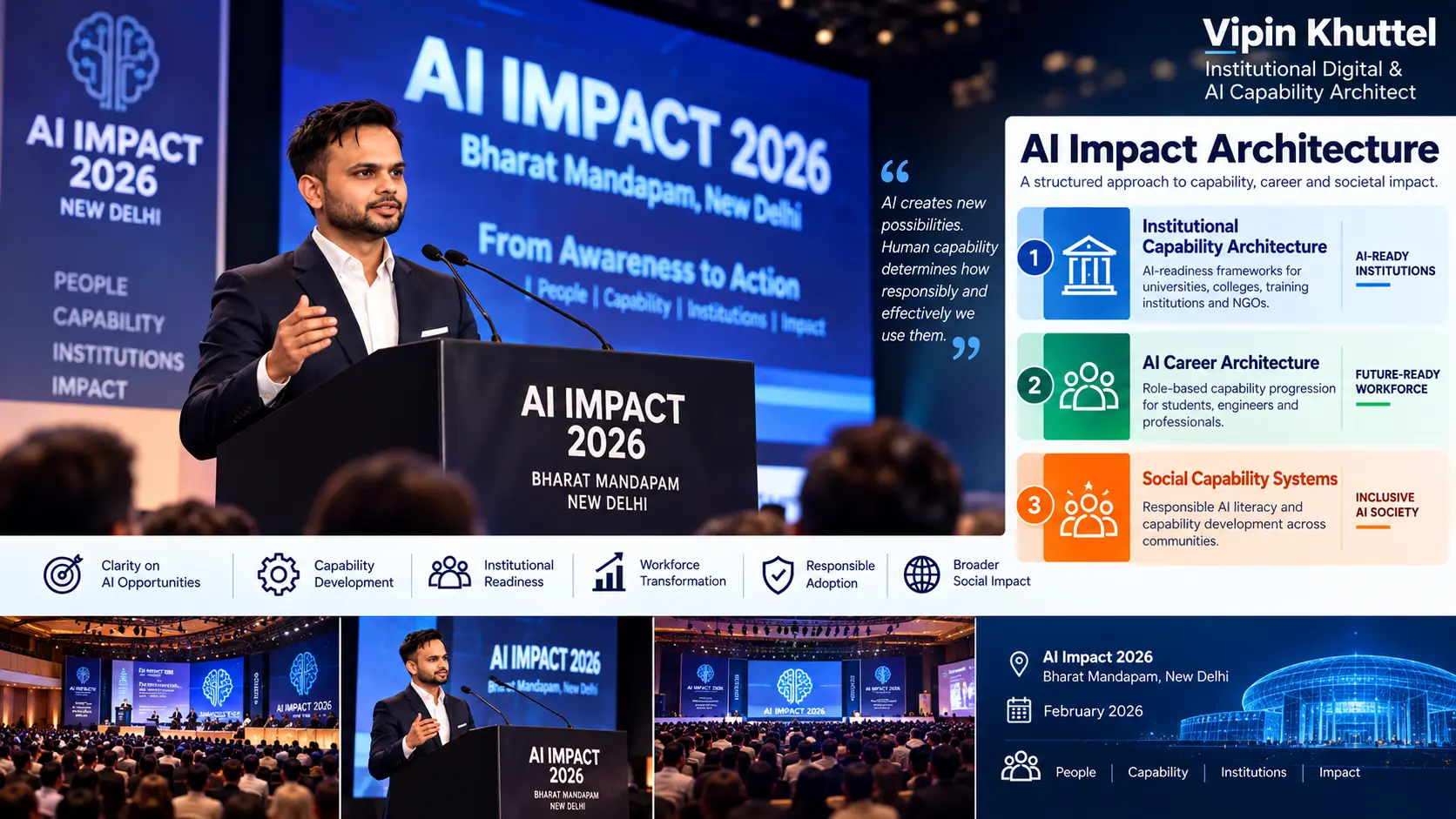
The systems through which AI capability is developed and deployed — engineering, research, infrastructure and governance. What must institutions build to turn AI access into sustained capability?
How individuals move from AI usage toward more advanced professional and technical roles as the nature of work changes — learning, career progression and AI-era skills.
How society adapts when AI changes work, institutions and economic systems — workforce systems, economic adaptation and broader capability development.
Read: India's AI transition, from technology access to institutional capability →
The same architecture scales from a single institution to a national ecosystem — moving AI capability from infrastructure and access toward institutional readiness.
AI readiness, academic capability and education transition.
Student capability and future skills.
Workforce-aligned learning and assessment.
Workforce capability and AI integration.
Media literacy, information ecosystems and responsible AI.
Research, institutional readiness and multi-stakeholder capability.
The architecture is written for the people who carry institutional responsibility for capability outcomes — not for any single job title or department.
The AI Capability hub is the practical, pathway-based entry point for using AI in everyday work. This page is the institutional architecture beneath it — the structural model that workforce systems, capability pathways and governance are built on.
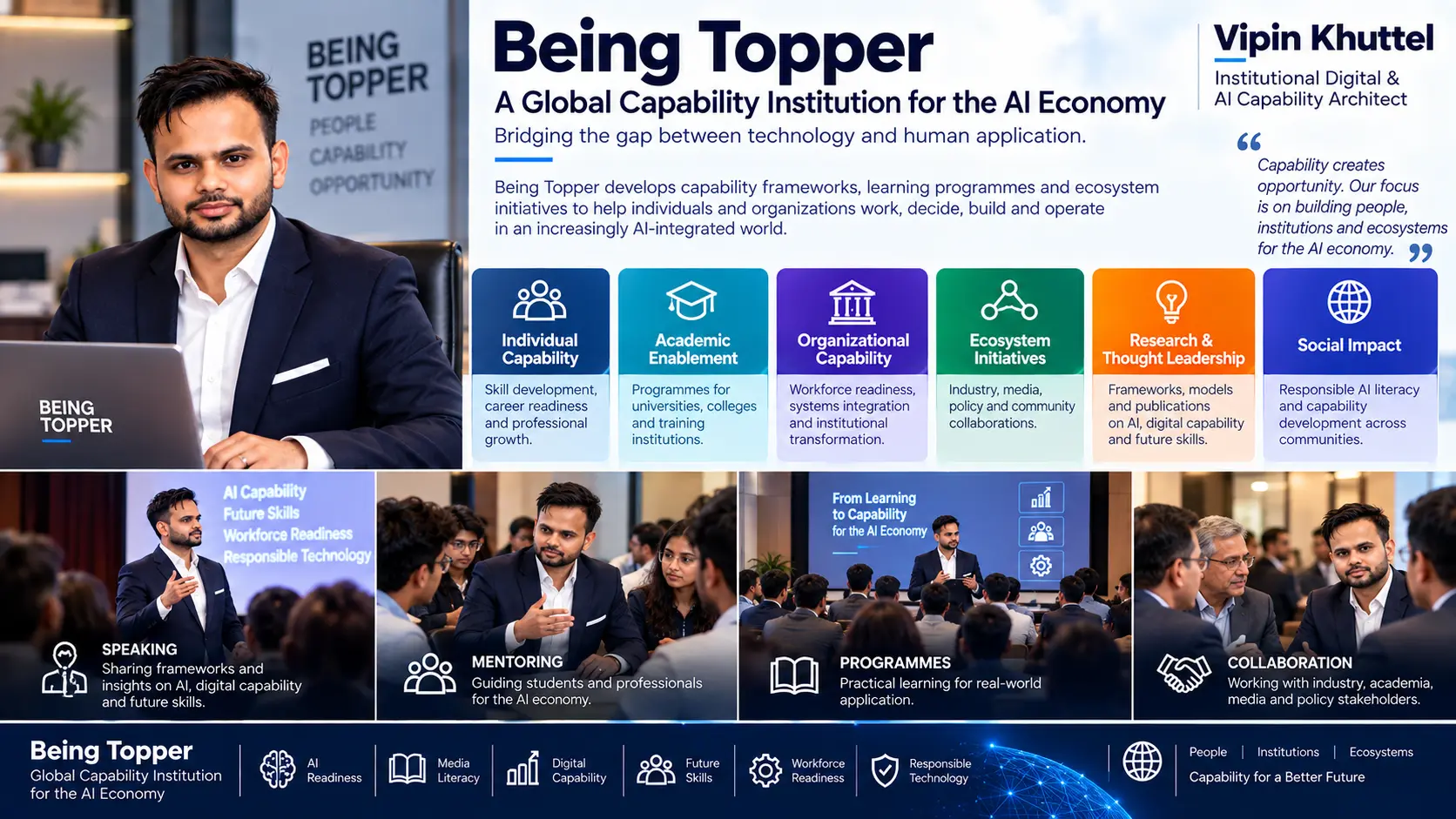
Vipin Khuttel is an Institutional Digital & AI Capability Architect whose work focuses on the intersection of AI, digital capability, education, media, workforce readiness and responsible technology.
His professional journey has evolved from digital strategy and digital capability toward institutional capability and, increasingly, the design of capability architecture for the AI era.
2011 → Present
Being Topper serves as the institutional capability-development platform through which frameworks, learning pathways, assessments and capability-building initiatives can be translated into practice.
Six formal frameworks make up this architecture. This page is the umbrella; each of the following develops one part of it in depth.
The overarching institutional framework.
This pageFrom awareness to stewardship.
Explore →Usage → Application Engineering → Foundation Model Development.
Explore →Capability → careers → institutions → society.
Explore →Awareness, judgment, framing, learning and responsible application.
An assessment layer connecting individual, institutional, workforce and national readiness.
The formal frameworks above provide the models. These six questions provide the interpretive lens applied consistently across research and articles built on them.
What is AI really?
What remains irreversibly human?
What must institutions do now?
What does this mean for my career?
Who is accountable?
What information can I trust?
It is a structured framework for aligning human capability, digital capability, AI capability, workforce readiness, institutional readiness and governance — moving institutions beyond technology access toward real, usable capability.
Tool usage is one layer of capability (Layer 1 in the Three-Layer model), not the whole of it. The architecture covers what an institution needs above tool usage: judgment, workflow redesign, workforce readiness and governance.
A six-stage model — Unaware, Aware, Literate, Capable, Architect, Steward — describing how capability develops progressively across individuals and institutions, from no structured understanding through to institutional governance and stewardship.
It is a mindset shift, not a skills gap. L2 asks how AI can help do the same work faster. L3 asks how the workflow should be redesigned from scratch now that AI exists.
AI Usage, AI Application Engineering, and Foundational Model Development. Most institutions operate at Layer 1, some at Layer 2, and very few need Layer 3.
No. The appropriate layer depends on the institution's role, purpose and requirements. Operating only at Layer 1 is not a gap — for most institutions, that is exactly where the value is.
The framework is developed and articulated through the work of Vipin Khuttel, Institutional Digital & AI Capability Architect and founder of Being Topper.
Through Being Topper — for AI-readiness assessment, capability maturity mapping or workforce capability programmes. Use the WhatsApp or call options below to start an institutional conversation.
The AI Capability hub is the practical, pathway-based entry point for using AI in everyday work. This page is the institutional architecture beneath it.
Governance & Institutional Systems addresses ethics, accountability, policy and audit. This architecture is the broader structural model that governance, workforce capability and institutional readiness are built on.
Capability architecture keeps AI adoption connected to institutional judgment, workforce readiness and responsible governance — not treated as a tooling decision alone.
For universities, colleges, training institutions, organizations and media bodies exploring AI-readiness frameworks, capability maturity assessment or workforce capability programmes.
The appropriate scope depends on the actual requirement and institutional context.