Post
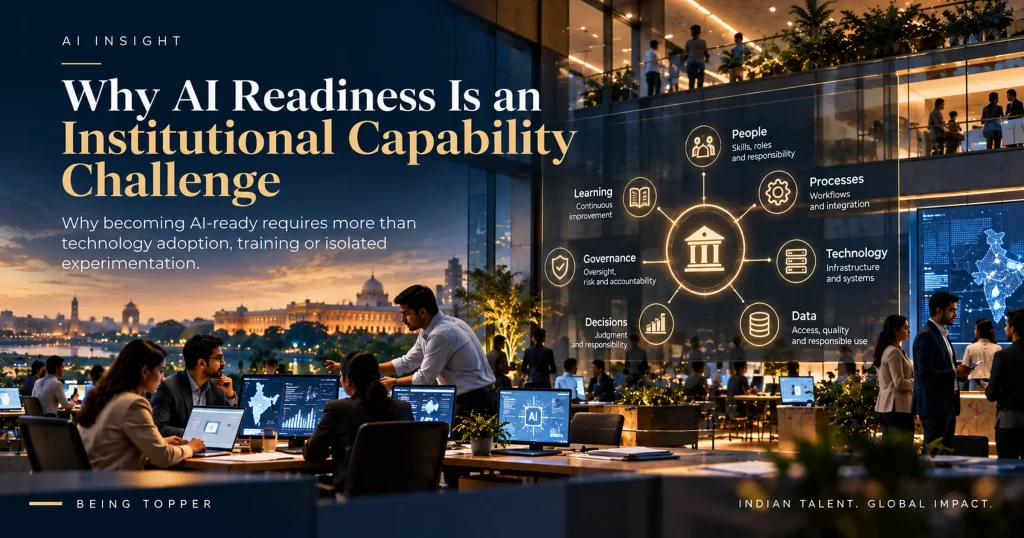
Why becoming AI-ready requires more than technology adoption, training or isolated experimentation. AI readiness is often mistaken for adoption. AI adoption is accelerating across organisations. Teams are experimenting with AI assistants. Professionals are incorporating AI into everyday work. Organisations are testing automation, analytics and generative systems. These developments matter. But adoption alone does not establish…

Post
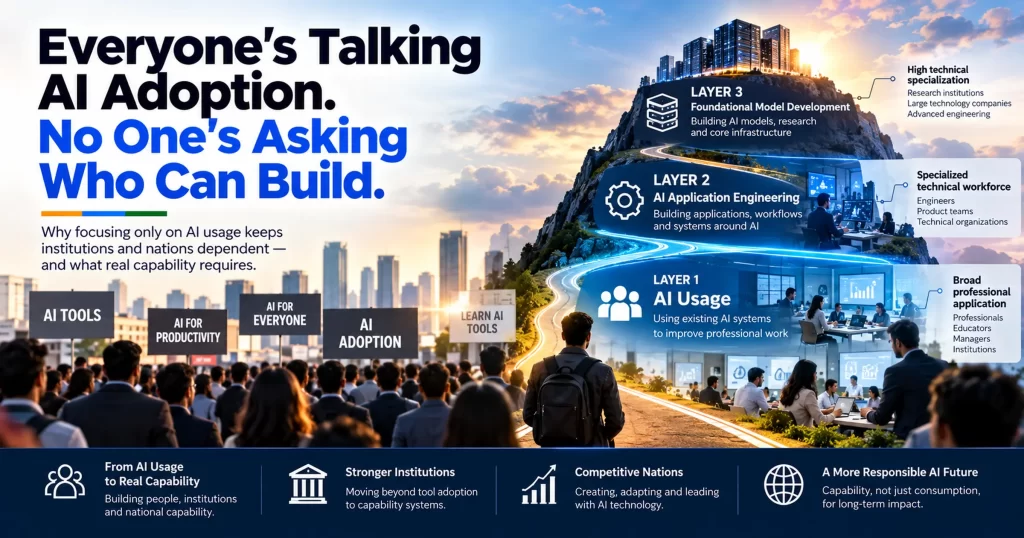
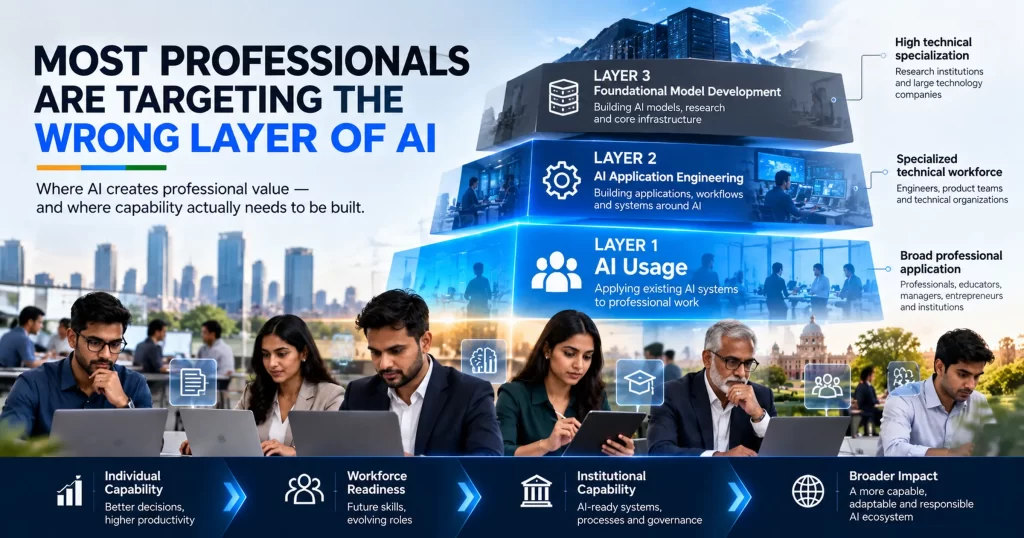
From using AI to engineering AI applications and developing the foundational systems behind them. AI is not one activity. The word “AI” is increasingly used as though it describes a single capability. It does not. Using an existing AI system, engineering an application around AI models, and developing foundational models are fundamentally different activities. They…
Post
Why AI readiness is a progression of capability, judgment and responsibility — not simply access to technology. AI readiness is not a binary condition. AI is becoming increasingly accessible. People can use AI assistants, generate content, analyse information, automate tasks and incorporate AI into everyday workflows with relatively little technical expertise. But access does not…
Post
AI Capability · National Readiness Everyone’s Talking AI Adoption. No One’s Asking Who Can Build AI. New Delhi, India · 1 October 2026 · Being Topper Open any industry report on AI readiness. Sit in any education policy meeting. Attend any corporate AI upskilling summit. The message is consistent: teach people to use AI tools.…
Post
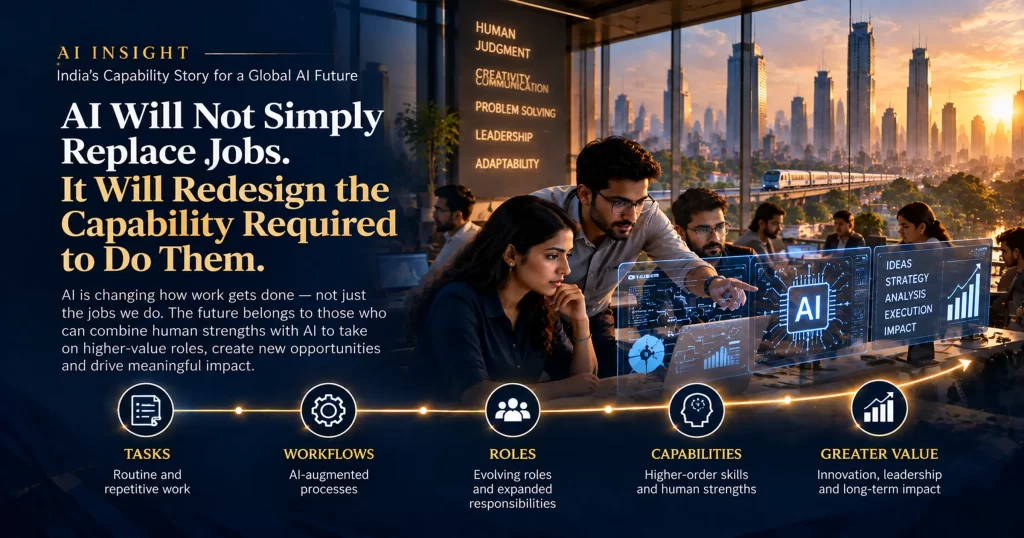
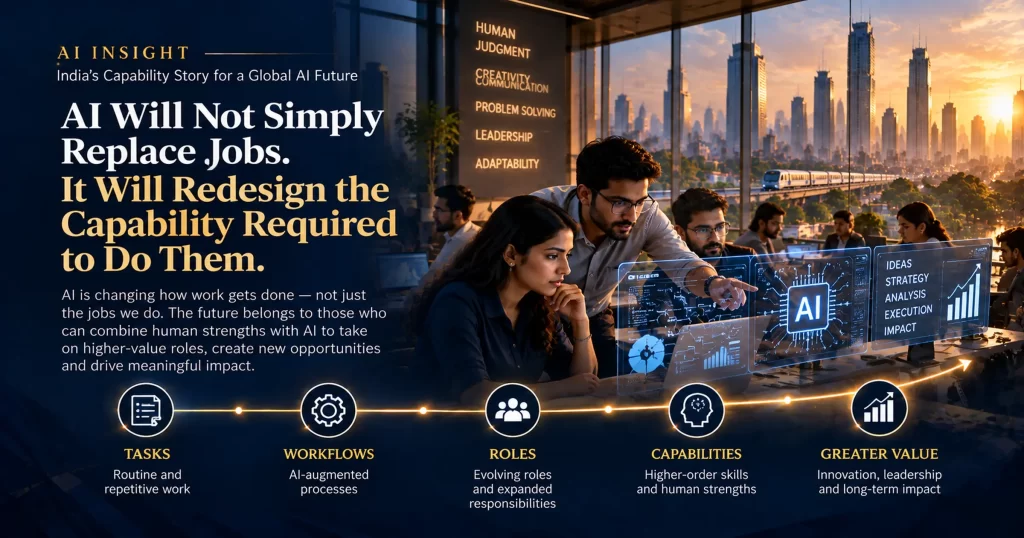
Why workforce readiness must focus on adaptable capability rather than predictions about individual jobs. The question surrounding artificial intelligence and employment is often framed in one direction: Will AI replace jobs? That question is understandable, but it does not capture the full change taking place. A job is not usually one task. It is a…
Post
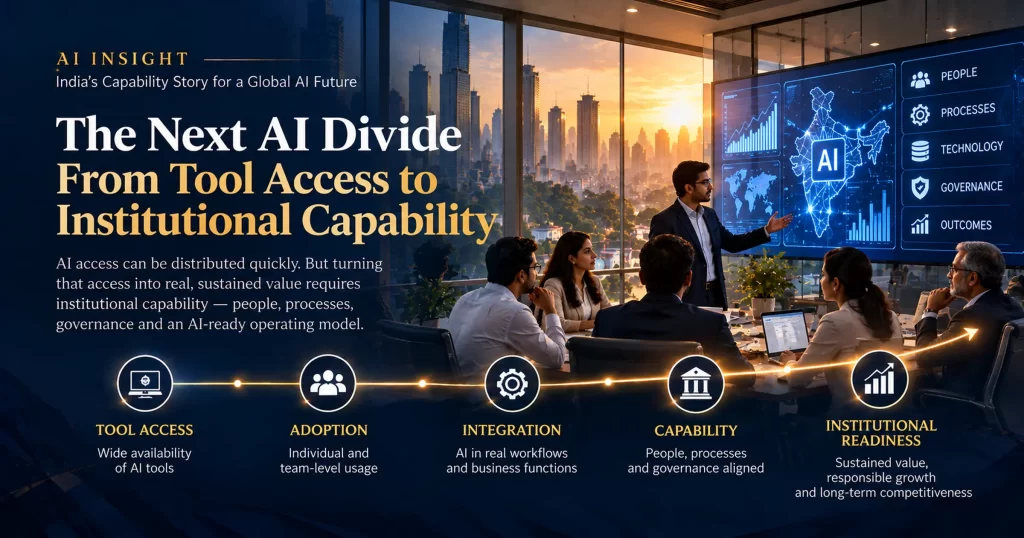
Why organizations need more than AI access to become genuinely AI-ready. AI adoption is increasingly moving from experimentation into everyday organizational environments. Organizations are acquiring AI tools, integrating AI into software platforms, experimenting with automation and encouraging employees to use generative AI in their work. But access creates a different question from capability. An organization…
Post
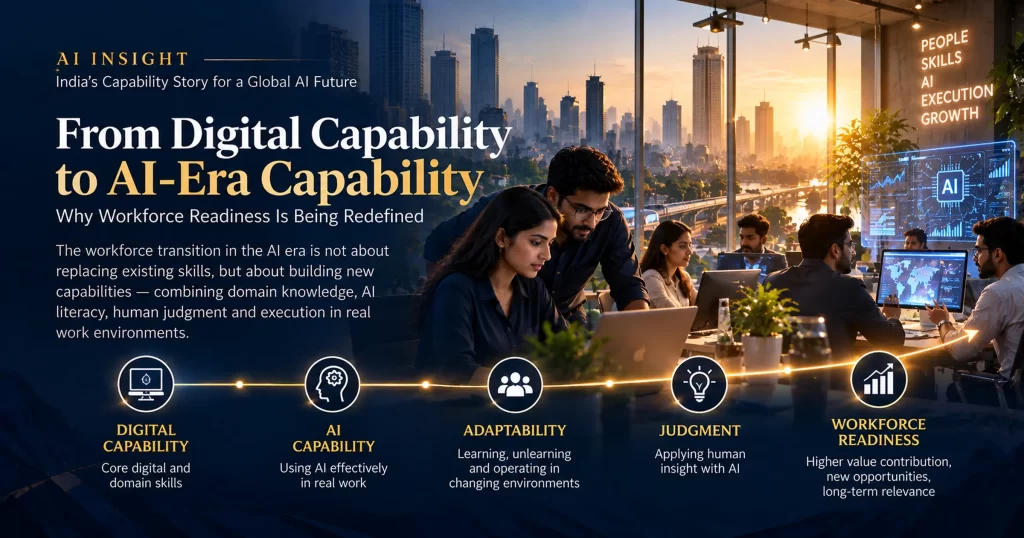
As technology changes the nature of work, capability must evolve beyond digital tool proficiency. Technology does not only introduce new tools. Over time, it changes the capabilities people need to work effectively. The shift from desktop software to cloud platforms, from websites to digital ecosystems, and now from conventional digital workflows to increasingly capable AI…
Post
Why education must move beyond teaching people how to operate AI tools. Artificial intelligence is becoming part of the environment in which people learn, teach, research and work. Students can access AI systems to explain concepts, generate ideas, summarize information, practice communication and assist with research. Educators can use AI for lesson preparation, learning resources,…
Post
AI Capability · The Layer Question Most Professionals Are Targeting the Wrong Layer of AI New Delhi, India · 1 October 2026 · Being Topper There is a conversation happening across every boardroom, campus, and career coaching platform right now. It sounds like this: “You need to understand how AI works. You need to learn…
Post
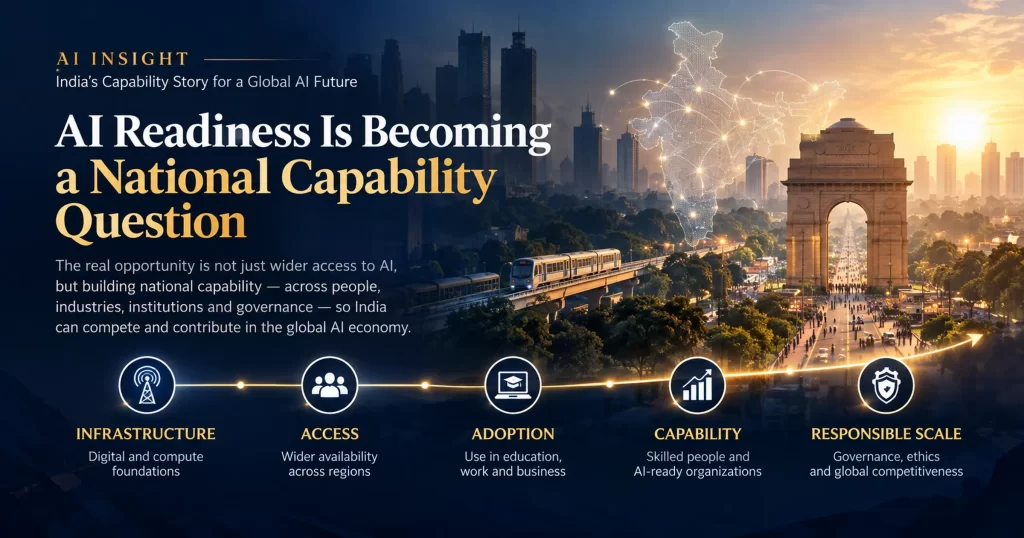
AI readiness is no longer only about infrastructure or technology adoption. It increasingly depends on whether people, institutions and public systems have the capability to use AI effectively, responsibly and at scale. AI Readiness Is Larger Than Technology The discussion around national AI readiness often begins with technology. How much computing capacity is available? Which…